 Krater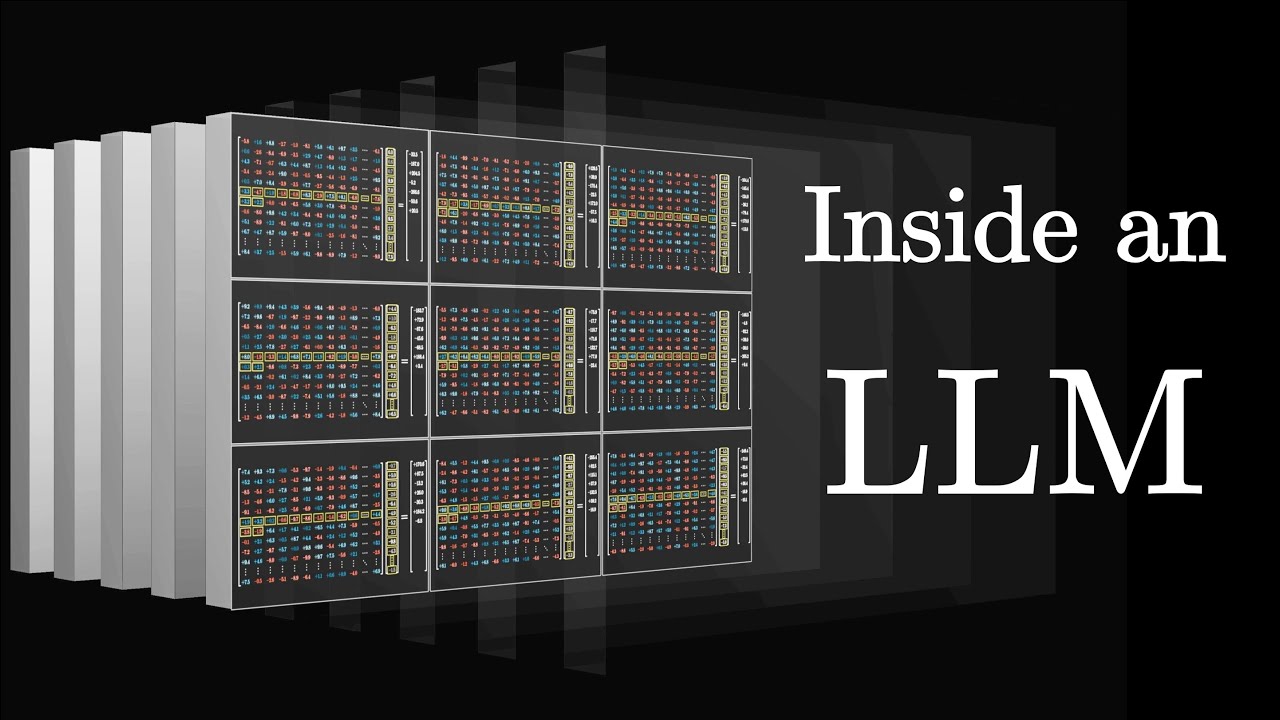
Transformers, the tech behind LLMs | Deep Learning Chapter 5
A video on YouTube. In Science & Engineering, a Krater category.
Watch on YouTubeSummary by Krater
This video explains the internal mechanics of transformer neural networks, focusing on how text is tokenized, embedded into vectors, and processed through attention blocks and multilayer perceptrons to predict subsequent words.
From the video
Answers: How do transformer neural networks like GPT-3 work internally?
- Transformer neural networks
- Tokenization and embedding matrices
- Attention mechanism in NLP
- Multilayer perceptrons
- Softmax function with temperature
What it concludes
- Transformer networks process text by breaking input into tokens, turning tokens into vectors using embedding matrices, and passing them through alternating attention blocks and multilayer perceptrons.
- Word embeddings position words in a high-dimensional space where vector directions correspond to semantic meanings and relationships.
- The softmax function turns an arbitrary list of numbers into a valid probability distribution where values range between 0 and 1 and sum to 1.
- Adjusting the temperature parameter in softmax controls the randomness of predictions by flattening or sharpening the probability distribution.
Rate it, review it and add it to your lists in Krater.
Titles and thumbnails from YouTube. Krater isn't affiliated with, endorsed by or sponsored by YouTube or Google.