 Krater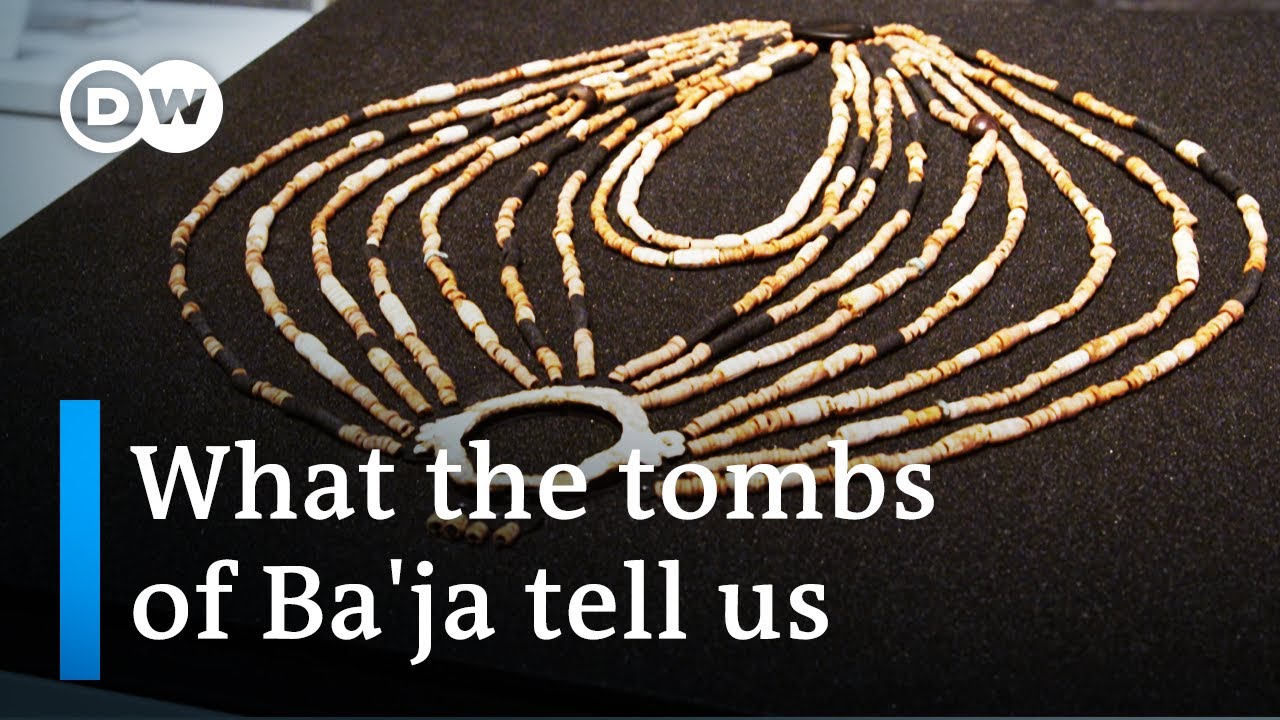
Jordan: The mysterious Stone Age village | DW Documentary
A video on YouTube. In Documentaries, a Krater category.
Watch on YouTubeSummary by Krater
Archaeologists and conservators uncover, restore, and analyze the necklace and remains of an eight-year-old child named Jamila in the 9,000-year-old Stone Age settlement of Ba'ja in Jordan. The team concludes that the necklace's exceptional craftsmanship and far-reaching trade network demonstrate complex social structures and skilled artisans in the Neolithic period.
From the video
Answers: What do archaeologists discover about the 9,000-year-old child burial and necklace in Ba'ja, Jordan?
- Archaeological excavation at Ba'ja
- Restoration of Neolithic jewelry
- Analysis of 9,000-year-old child burial
- Neolithic bead production techniques
- Trade networks in the Jordan Rift Valley
What it concludes
- The necklace's exceptional craftsmanship and aesthetic sensibilities demonstrate that early sedentary humans possessed specialized skill sets and a far-ranging trade network.
- The villagers' existence increasingly depended on access to raw materials and market forces, with exotic materials used for necklaces indicating the importance of valuable objects.
- Baja's remote location protected the artifacts from grave robbers and later human construction, allowing archaeologists to uncover well-preserved Neolithic structures and burials.
- Replication experiments reveal that early humans produced beads using sandstone disks, burins, and rigorous techniques, highlighting the precision required for prehistoric craftsmanship.
Rate it, review it and add it to your lists in Krater.
Titles and thumbnails from YouTube. Krater isn't affiliated with, endorsed by or sponsored by YouTube or Google.