 Krater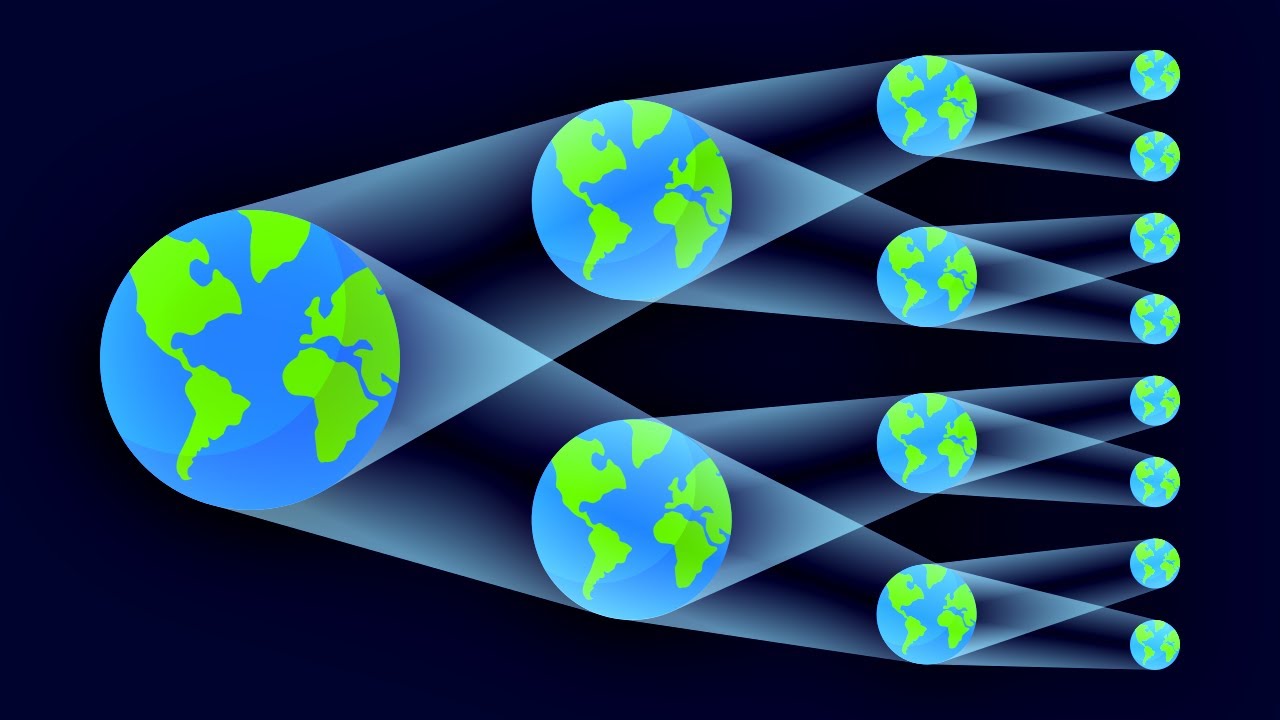
Why Parallel Universes Are Probably Real
A video on YouTube. In Science & Engineering, a Krater category.
Watch on YouTubeSummary by Krater
This video explains the principles of quantum mechanics through the lens of Schrödinger's cat thought experiment, examining superposition, entanglement, and measurement, and discusses the many-worlds interpretation with physicist Sean Carroll.
From the video
Answers: How does Schrödinger's cat explain quantum mechanics and the many-worlds interpretation?
- quantum mechanics
- Schrödinger's equation
- Schrödinger's cat
- superposition
- entanglement
- measurement problem
- many-worlds interpretation
What it concludes
- Quantum mechanics operates on two sets of rules: the continuous evolution of the wave function via the Schrödinger equation and the discontinuous collapse of the wave function upon measurement.
- Max Born proposed that the square of the wave function's amplitude represents the probability of finding a particle at a given point.
- Superposition means that quantum objects can exist in multiple different states at the same time until measured.
- Quantum entanglement occurs when particles interact and become described by a single wave function, meaning measuring one instantaneously affects the other.
- The many-worlds interpretation posits that the wave function never truly collapses, and every possible outcome of a quantum event actually occurs in branching, non-interacting worlds.
Rate it, review it and add it to your lists in Krater.
Titles and thumbnails from YouTube. Krater isn't affiliated with, endorsed by or sponsored by YouTube or Google.