 Krater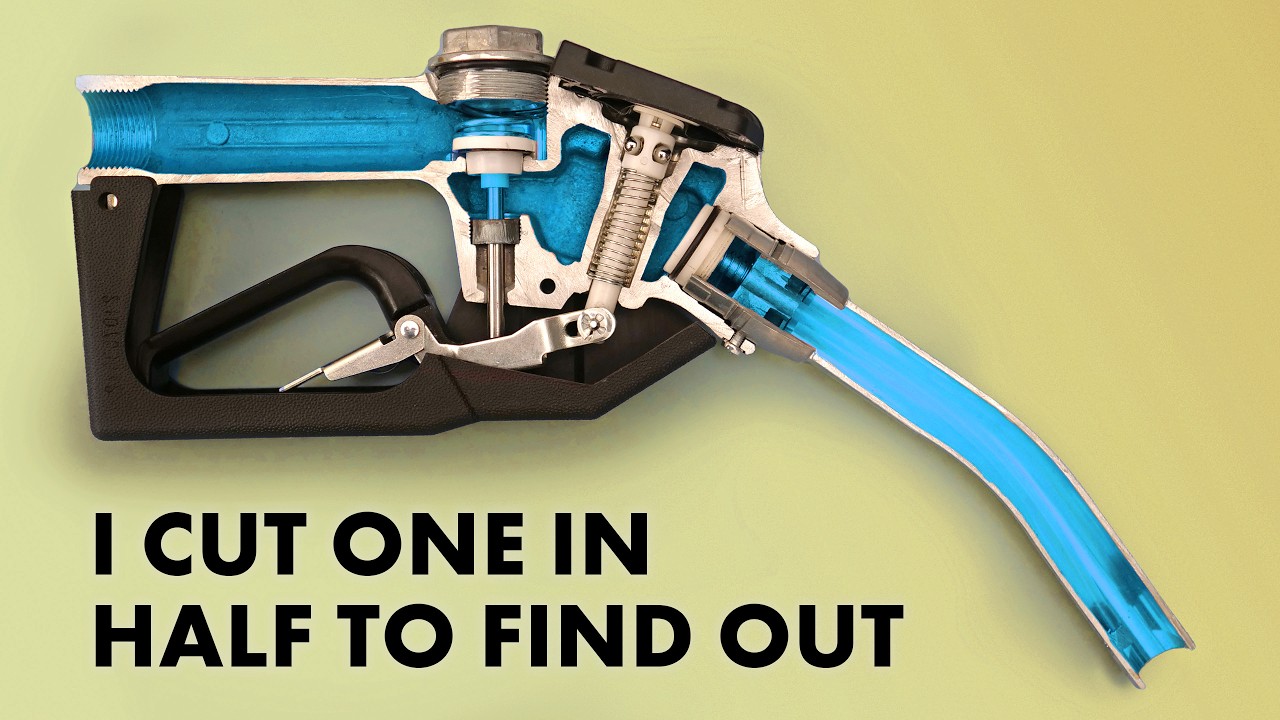
How petrol pumps know when to turn themselves off
A video on YouTube. In Science & Engineering, a Krater category.
Watch on YouTubeSummary by Krater
Steve Mould cuts a petrol pump nozzle in half and builds physical fluid models to explain how the automatic shut-off mechanism uses the Venturi effect and pressure drops to detect when a fuel tank is full.
From the video
Answers: How does a petrol pump nozzle know when to turn off automatically?
- petrol pump nozzle mechanism
- Venturi effect
- fluid dynamics in nozzles
- automatic fuel shut-off physics
- Bernoulli's principle
- pressure drop in constrictions
What it concludes
- The Venturi effect creates a pressure drop in the constriction of the nozzle tube, which draws air in through a small hole.
- When petrol reaches the end of the nozzle, it blocks the hole and liquid is sucked in instead of air.
- The heavier liquid reduces suction efficiency, creating a stronger negative pressure in the upper chamber that pulls up a membrane and releases ball bearings.
- The release of the ball bearings allows the valve mechanism to close and shut off the fuel flow automatically.
Rate it, review it and add it to your lists in Krater.
Titles and thumbnails from YouTube. Krater isn't affiliated with, endorsed by or sponsored by YouTube or Google.