 Krater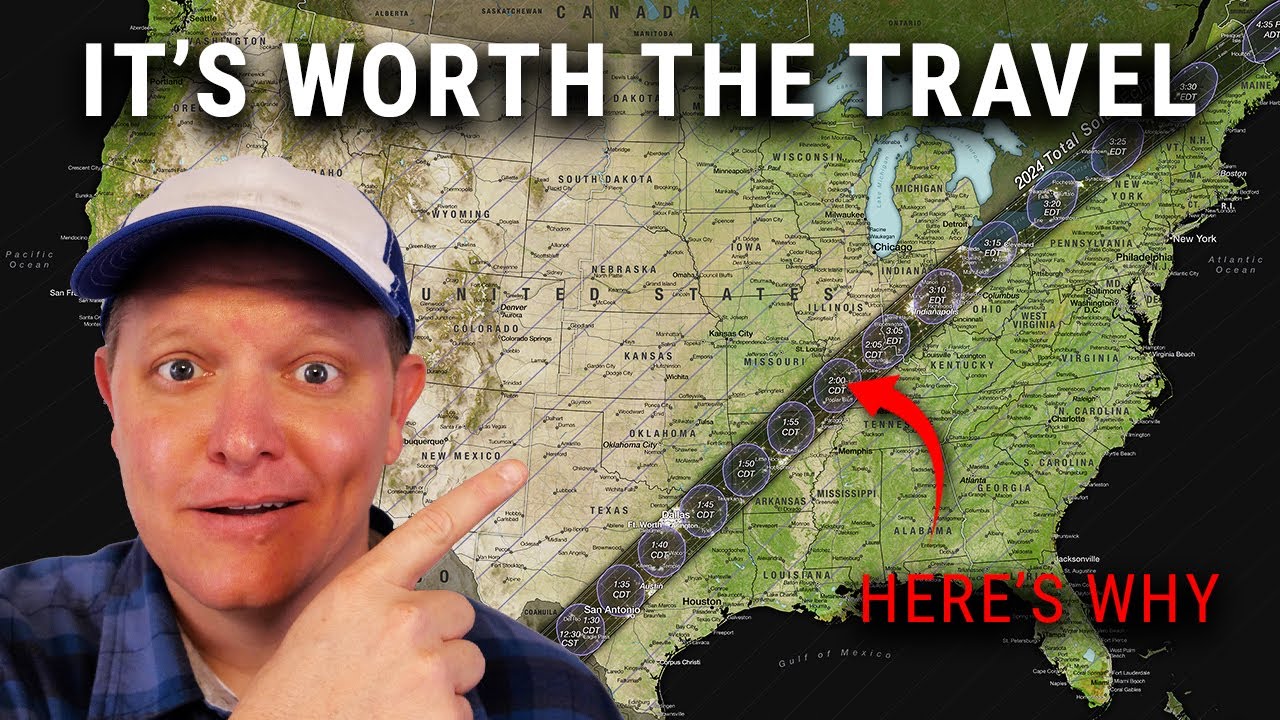
April 8, 2024 Total Solar Eclipse: Here's what you need to know -Smarter Every Day 295
A video on YouTube. In Science & Engineering, a Krater category.
Watch on YouTubeSummary by Krater
Smarter Every Day visits solar eclipse expert Dr. Gordon Telepun to explain nine science stations and phenomena to look for during a total solar eclipse, including temperature inversion, pinhole projection, glasses safety, sharp and fuzzy shadows, wind effects, convective clouds, animal behavior, the Purkinje effect, and shadow bands.
From the video
Answers: What science phenomena can you observe during a total solar eclipse?
- total solar eclipse science
- partial phase phenomena
- temperature logging during eclipse
- pinhole projection
- eclipse glasses safety
- Purkinje effect color perception
- shadow bands
What it concludes
- Temperature decreases at ground level during partial eclipse phases before the upper air temperature sensors drop.
- Welding glasses are not certified for solar eclipse viewing because they fail to block the right amount of infrared and ultraviolet light.
- Shadows from objects oriented perpendicular to the crescent sun become fuzzy while parallel shadows remain sharp.
- Eclipse breezes occur when cooled air from distant umbra-shaded valleys rolls down toward the observation site.
- Convective cumulus clouds can dissipate before totality as the eclipse shuts off ground heating and moisture.
- Animals such as crickets and bees alter their daytime behavior and mistake the eclipse darkening for nightfall, causing temporary increased activity before totality settles them down.
Rate it, review it and add it to your lists in Krater.
Titles and thumbnails from YouTube. Krater isn't affiliated with, endorsed by or sponsored by YouTube or Google.