 Krater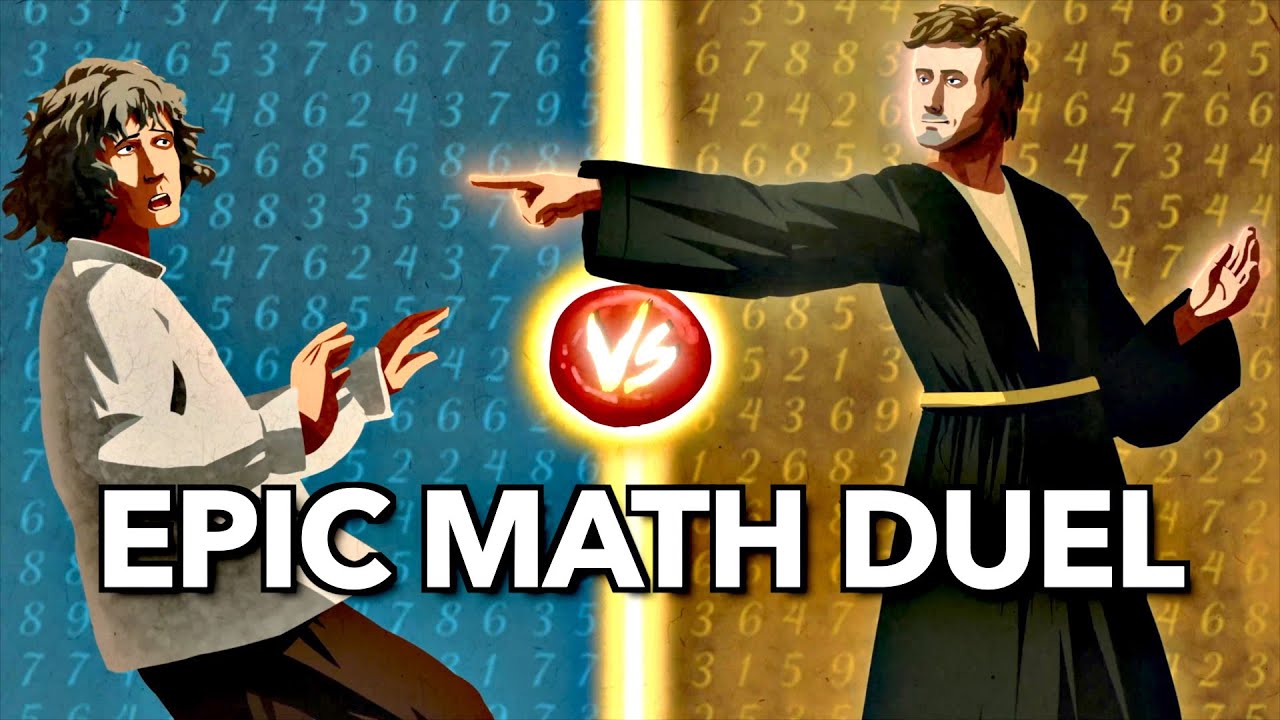
How Imaginary Numbers Were Invented
A video on YouTube. In Science & Engineering, a Krater category.
Watch on YouTubeSummary by Krater
This video explores the history and geometric origins of the cubic equation, detailing how mathematicians like Luca Pacioli, Scipione del Ferro, and Niccolò Fontana Tartaglia struggled to solve it before Gerolamo Cardano published the general solution in Artis Magna, ultimately revealing that imaginary numbers are essential to quantum physics.
From the video
Answers: How did ancient mathematicians solve cubic equations and why did imaginary numbers become necessary?
- Cubic equations
- History of mathematics
- Completing the square geometrically
- Imaginary numbers
- Cardano's formula
- Schrödinger equation
What it concludes
- Ancient civilizations could not solve the cubic equation and concluded a solution was impossible.
- Ancient mathematicians avoided negative numbers, creating multiple positive coefficient versions of equations instead.
- Scipione del Ferro and later Tartaglia found ways to solve depressed cubics, with Tartaglia solving 30 problems in two hours.
- Gerolamo Cardano learned the cubic solution method from Tartaglia under a sworn oath of secrecy, which he later published in Artis Magna.
- Rafael Bombelli resolved the paradox of negative square roots by introducing complex numbers as a combination of ordinary numbers and the square root of minus one.
- Imaginary numbers, initially considered useless or impossible, turned out to be fundamental in describing reality in quantum physics through the Schrödinger equation.
Rate it, review it and add it to your lists in Krater.
Titles and thumbnails from YouTube. Krater isn't affiliated with, endorsed by or sponsored by YouTube or Google.