 Krater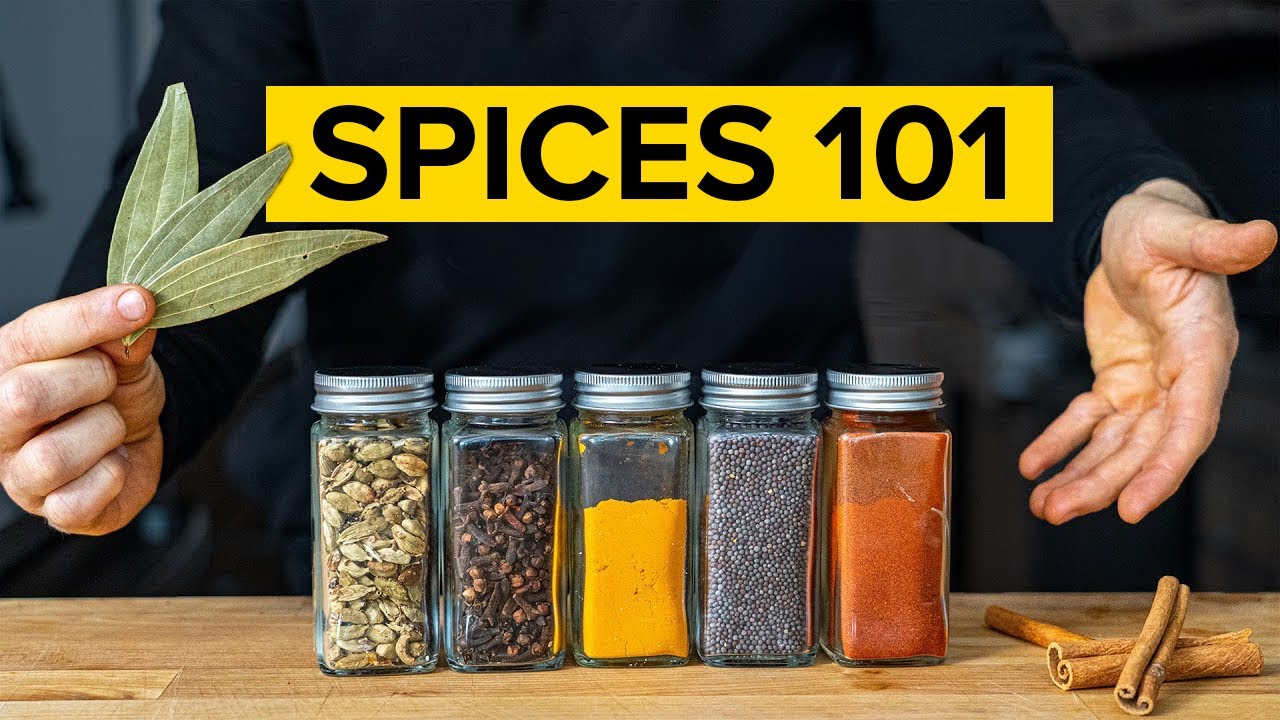
The Beginner's Guide to Cooking with Spices (with Testing)
A video on YouTube. In Cooking, a Krater category.
Watch on YouTubeSummary by Krater
An exploration of how applying heat to spices affects aroma molecules, tested across four cooking experiments with chicken curry.
From the video
Answers: Does toasting and blooming spices actually change the flavor of a dish?
- Aroma molecules and odor receptors
- Toasting whole spices versus untoasted spices
- Bloomed spices in oil versus spices added at the end of cooking
- Chicken curry experiment comparisons
Ingredients
- whole spices (cardamom, black pepper, cumin, cinnamon, cloves)
- 1 spoonful garam masala
- chicken thighs
- salt
- lemon juice
- yogurt
- ginger
- garlic
- ground cumin
- ground paprika
- turmeric
- oil
- onion
- rice
- cilantro
- pickled onions
What it concludes
- Toasting whole spices alters top notes, mellows middle and bottom notes, and creates new aromas due to browning and grinding.
- Toasted garam masala has a floral, mellow, and roasty profile compared to the sharp, intense nature of untoasted garam masala.
- Blooming spices in oil allows fat-soluble aroma molecules to be held onto and delivered throughout the sauce.
- Spices added at the end of cooking taste more disjointed and tomato-forward, whereas bloomed spices create a more cohesive and smooth sauce flavor.
Rate it, review it and add it to your lists in Krater.
Titles and thumbnails from YouTube. Krater isn't affiliated with, endorsed by or sponsored by YouTube or Google.