 Krater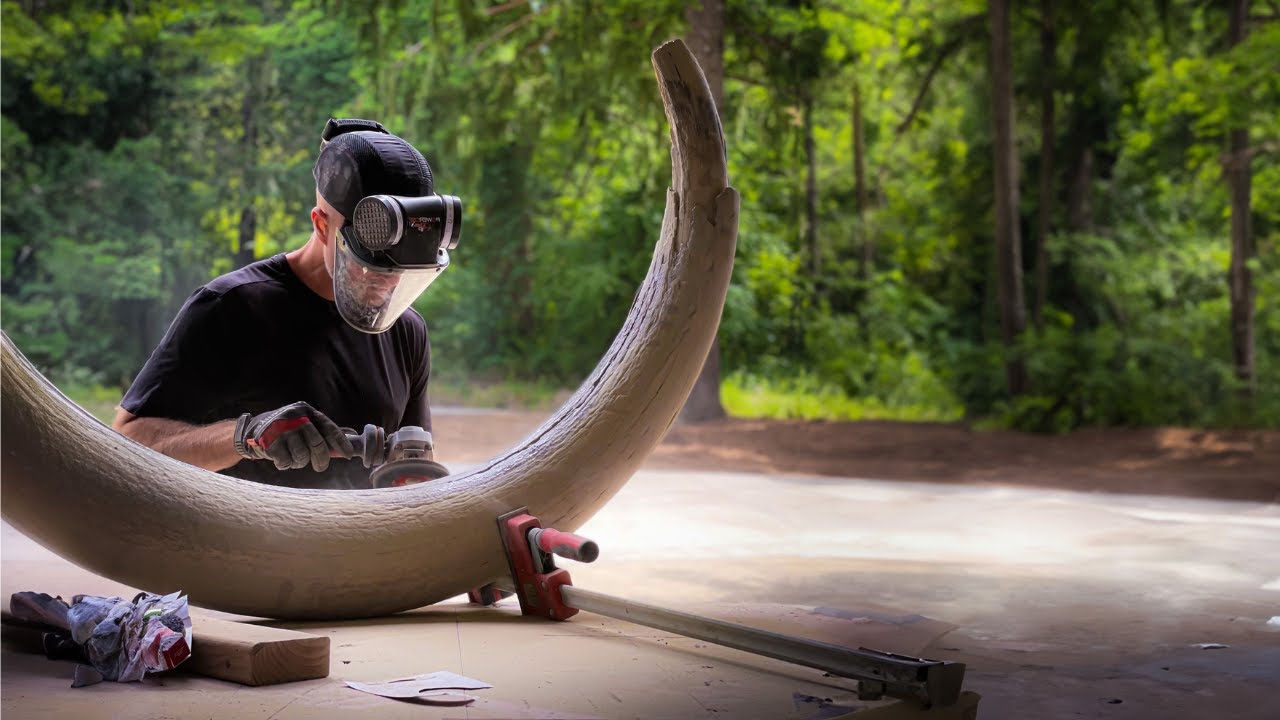
Mammoth Tusk Restoration
A video on YouTube. In Maker & Builds, a Krater category.
Watch on YouTubeSummary by Krater
A woodworker restores a 20,000-year-old woolly mammoth tusk over a year, using hose clamps, epoxy, bone ash, and sandpaper.
From the video
Answers: How do you restore a mammoth tusk?
- mammoth tusk restoration
- fossil stabilization
- epoxy and bone ash filling
- sanding ivory
- making a custom metal display stand
What it concludes
- Mammoth ivory has a Mohs hardness of 3-5, making it harder than non-ferrous metals like aluminum, brass, bronze, and copper.
- Construction adhesive is the wrong adhesive to use on this project because it is not a two-part system and requires air to cure.
- A Sharpy marker serves as an effective dye for coloring bone ash filler to match mammoth ivory.
Rate it, review it and add it to your lists in Krater.
Titles and thumbnails from YouTube. Krater isn't affiliated with, endorsed by or sponsored by YouTube or Google.