 Krater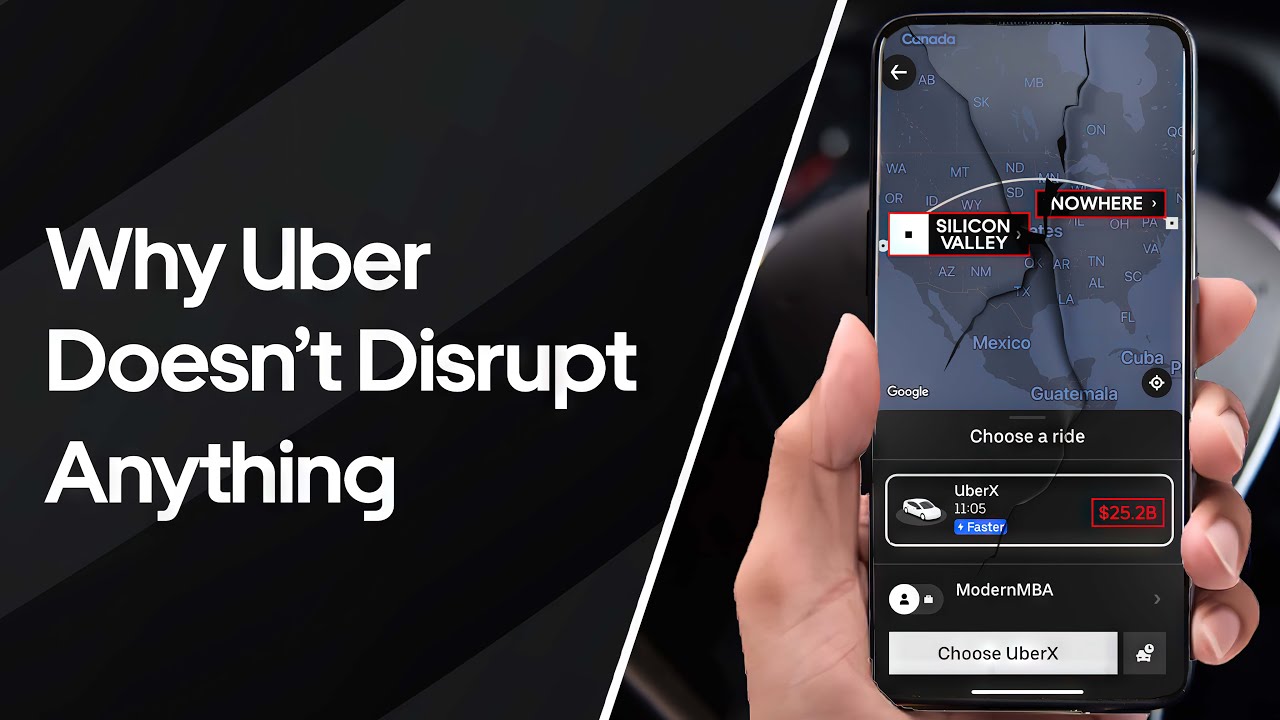
Why Uber Fails to Disrupt
A video on YouTube. In Business & Money, a Krater category.
Watch on YouTubeSummary by Krater
This video examines Uber's financial performance, business model, and path to profitability, analyzing how ride-sharing platforms use massive funding and subsidies to gain market share.
From the video
Answers: Is Uber actually profitable and how does its platform business model work?
- Uber financial performance and profitability
- On-demand platform business model
- Sharing economy and gig work economics
- Venture capital funding and startup valuation
- Unit economics of ride-sharing and delivery
What it concludes
- By conventional metrics and accounting standards, Uber remains unprofitable despite periods of showing adjusted profitability.
- Uber utilized multi-billion-dollar subsidies and venture capital funding to artificially lower prices, capture market share, and crowd out competitors.
- Uber's unit economics show that driver pay per trip decreased while Uber's take rate increased significantly over time.
- Uber's expansion into food delivery through Uber Eats and cross-promoting platform services aims to increase customer retention and reduce acquisition costs.
Rate it, review it and add it to your lists in Krater.
Titles and thumbnails from YouTube. Krater isn't affiliated with, endorsed by or sponsored by YouTube or Google.