 Krater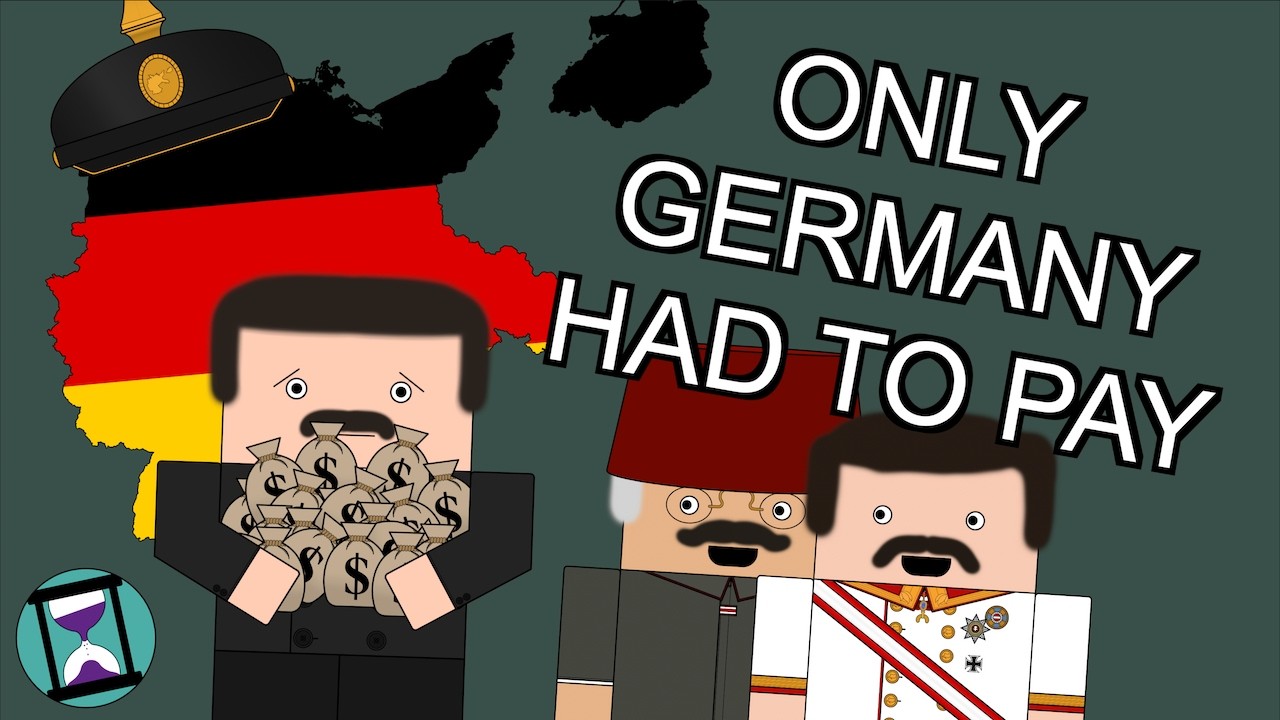
Why didn't the other Central Powers have to pay reparations too? (Short Animated Documentary)
A video on YouTube. In History, a Krater category.
Watch on YouTubeSummary by Krater
This video examines why Germany was uniquely forced to pay massive reparations after World War I while its fellow Central Powers—Austria-Hungary, Bulgaria, and the Ottoman Empire—faced different financial outcomes.
From the video
Answers: Why did only Germany pay reparations after World War I while other Central Powers did not?
- World War I reparations
- Treaty of Versailles
- Treaty of Saint-Germain-en-Laye
- Treaty of Neuilly-sur-Seine
- Treaty of Trianon
- Treaty of Sèvres
- Treaty of Lausanne
- Central Powers defeat
What it concludes
- Germany was forced to pay massive reparations under the Treaty of Versailles because its government remained largely intact and solvent.
- Bulgaria was required to pay a small fraction of German reparations alongside restitutions in kind, which severely damaged its economy.
- Austria avoided paying meaningful reparations because the empire fractured completely and its capital faced severe famine and economic collapse.
- Hungary lost 70% of its land and 65% of its population under the Treaty of Trianon and was meant to pay reparations at a later date, but never did.
- The Ottoman Empire's reparations were effectively cancelled after the Turkish Nationalists overthrew the old government and negotiated the Treaty of Lausanne.
Rate it, review it and add it to your lists in Krater.
Titles and thumbnails from YouTube. Krater isn't affiliated with, endorsed by or sponsored by YouTube or Google.