 Krater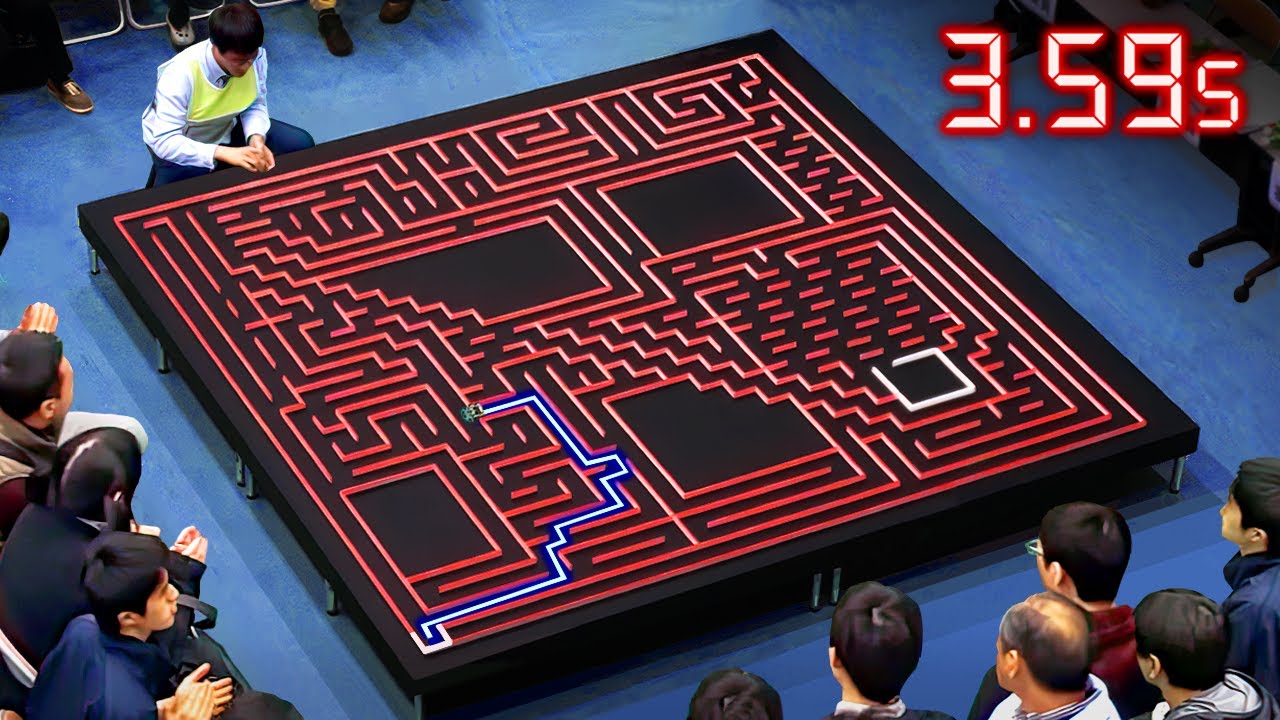
The Fastest Maze-Solving Competition On Earth
A video on YouTube. In Science & Engineering, a Krater category.
Watch on YouTubeSummary by Krater
This video explores the history and engineering evolution of Micromouse, a competitive robotics event where autonomous robot mice race to solve a maze as quickly as possible. The video covers the transition from wall-following and depth-first search strategies to flood-fill algorithms, and from crude relay-switch mechanics to four-wheel omnidirectional drives, vacuum fans for downforce, and advanced CAD design tools.
From the video
Answers: How has Micromouse robot maze-solving competition evolved over time?
- Micromouse maze solving
- Autonomous robotics competitions
- Flood-fill search algorithm
- Centripetal force and friction in racing
- CAD design software for robotics
What it concludes
- Claude Shannon constructed an electronic mouse named Theseus in 1952 that solved a maze using trial and error, inspiring the field of AI.
- Wall-following and depth-first search algorithms are ineffective because they can miss shorter paths or get stuck in loops.
- Flood-fill algorithms and mechanical upgrades such as downforce vacuum fans and omnidirectional wheels transformed Micromouse into high-speed precision racing.
- Engineers using Onshape can collaborate in real-time on complex CAD designs like robots and engines across multiple devices.
Rate it, review it and add it to your lists in Krater.
Titles and thumbnails from YouTube. Krater isn't affiliated with, endorsed by or sponsored by YouTube or Google.