 Krater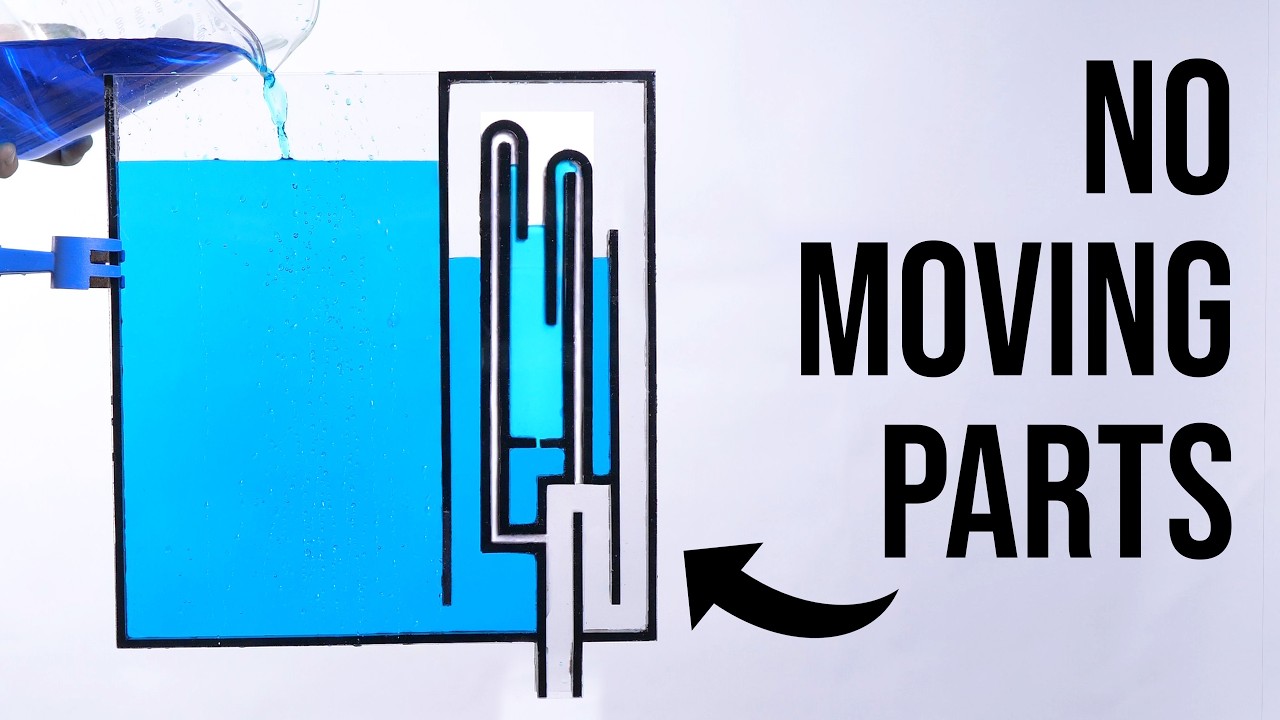
Water powered timers hidden in public restrooms
A video on YouTube. In Science & Engineering, a Krater category.
Watch on YouTubeSummary by Krater
Steve Mould explains the physics of automatic siphons, why they need an air inlet to work reliably when filling slowly, and demonstrates his 2D design and its practical evolution into a 3D siphon unit.
From the video
Answers: How do automatic siphons work and how do you design one that primes reliably?
- automatic siphons
- fluid dynamics
- air locks in siphons
- urinal flushing mechanisms
- Henson Shaving AL13 safety razor
What it concludes
- Automatic siphons require an air inlet to break the siphon and prevent continuous dribbling when filling slowly.
- Connecting the air inlet and priming siphon to the main siphon channel blocks air entry once the main siphon is activated.
- The Henson AL13 razor is engineered to precision standards with a firmly held blade extending 30 microns from the shave plane.
Rate it, review it and add it to your lists in Krater.
Titles and thumbnails from YouTube. Krater isn't affiliated with, endorsed by or sponsored by YouTube or Google.