 Krater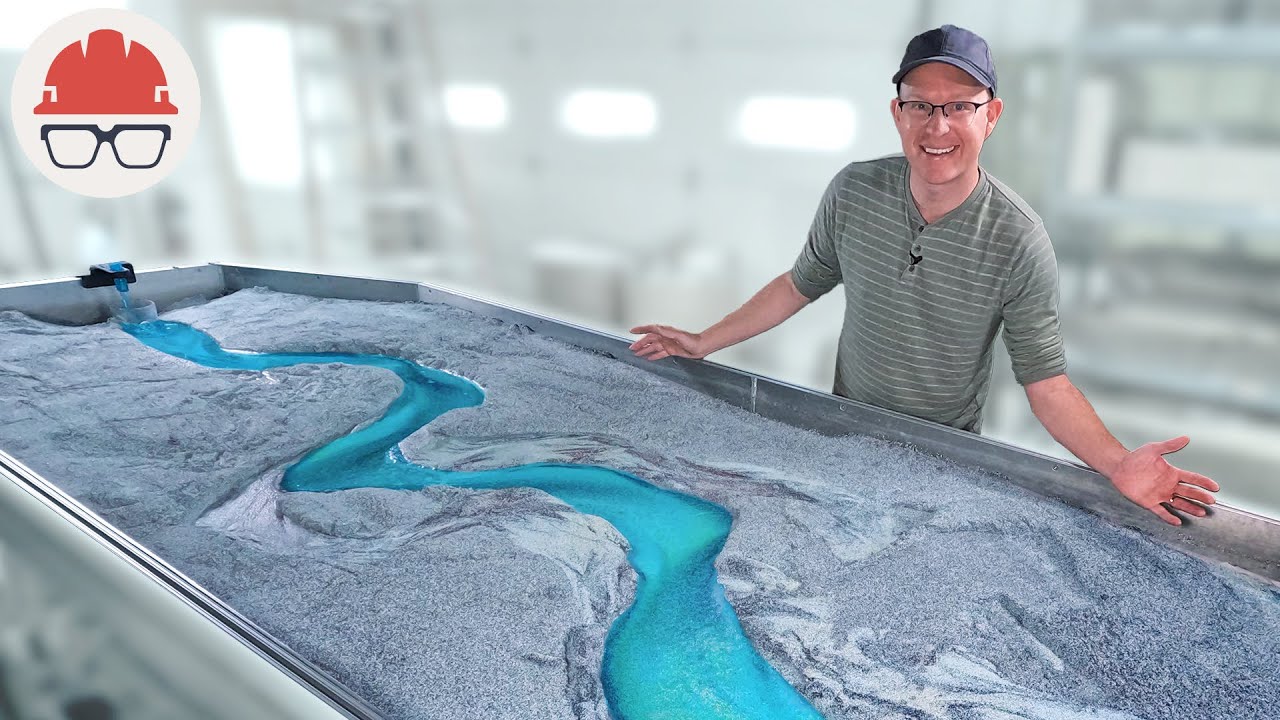
Why Rivers Move
A video on YouTube. In Science & Engineering, a Krater category.
Watch on YouTubeSummary by Krater
An explainer on fluvial geomorphology, examining how rivers change their paths through the landscape and why they meander. The video uses physical stream table models and Lane's equation to demonstrate how changes in water discharge, sediment load, sediment size, and slope affect river stability, erosion, and deposition.
From the video
Answers: Why do rivers meander and how do they change shape?
- Fluvial geomorphology
- River meanders
- Sediment transport
- Lane's equation
- Stream tables
- Erosion and deposition
What it concludes
- In a stable stream, the flow of water multiplied by slope is proportional to the flow of sediment multiplied by its size.
- Increasing the sediment load in a river relative to water flow causes deposition and aggradation in the river bed.
- Building a dam across a river channel slows down the flow, causing heavy sediment to settle behind the dam while finer particles travel downstream.
- Decreasing the size of the sediment load in a river shifts equilibrium toward erosion downstream of a dam.
- Wildfires increase sediment load by burning vegetation that stabilizes soil, causing erosion and deposition downstream.
- Lane's equation provides a qualitative relationship to characterize the magnitude of change in river meanders rather than exact numerical rates.
Rate it, review it and add it to your lists in Krater.
Titles and thumbnails from YouTube. Krater isn't affiliated with, endorsed by or sponsored by YouTube or Google.