 Krater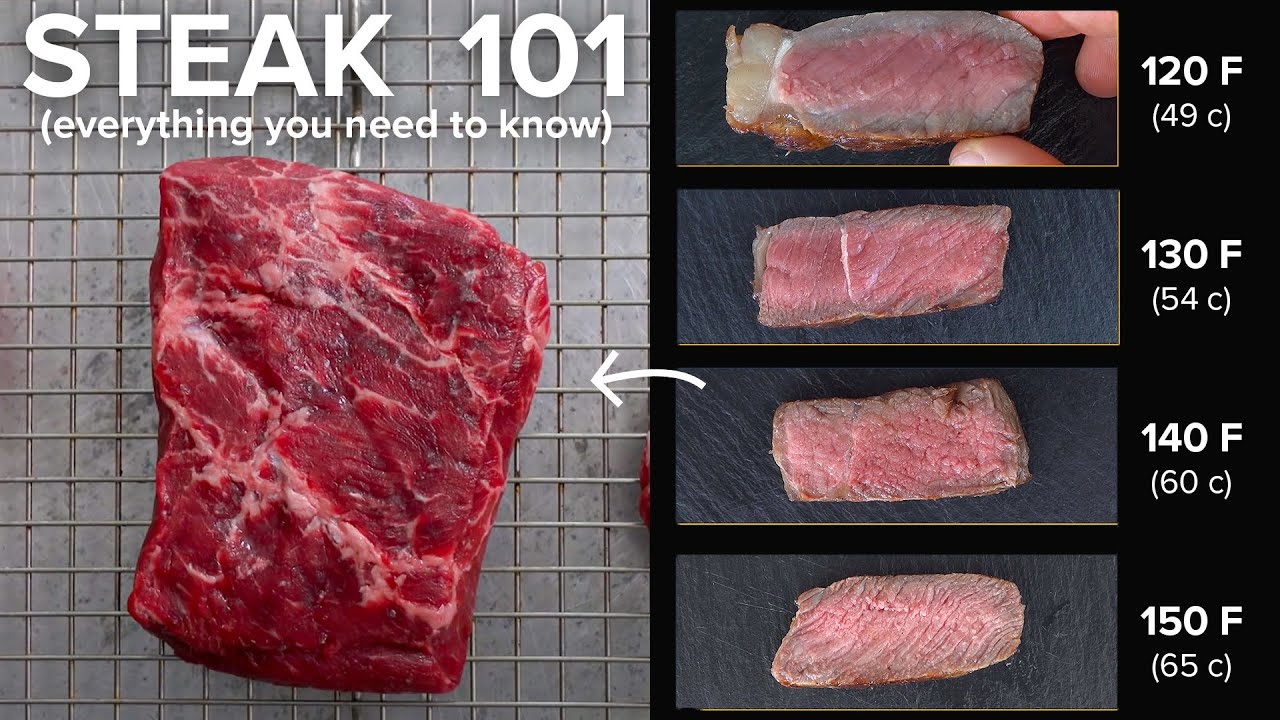
How to make Steaks at home better than a steak house
A video on YouTube. In Cooking, a Krater category.
Watch on YouTubeSummary by Krater
An explainer on steak science covering how to choose a cut, how and when to salt, and how to apply heat for the best texture and Maillard browning.
From the video
Answers: How do I choose, salt, and cook a steak?
- USDA beef grades
- intramuscular fat marbling
- steak cuts comparison
- salt diffusion and osmosis
- dry brining steak
- Maillard reaction temperature stages
- pan searing techniques
- carryover cooking and resting
Ingredients
- steak
- salt
- butter
- oil
What it concludes
- Intramuscular fat (marbling) melts when cooked between 130 and 140 F, lubricating muscle fibers for a juicier and more flavorful steak.
- Ribeye has the most marbling and beefy flavor, New York strip offers a balance of beefy flavor and tenderness, and filet mignon is the most tender but least beefy.
- Salting a steak 1 to 2 hours in advance allows salt to internally season the meat via diffusion and retain moisture via osmosis.
- Cooking a steak to a lower internal temperature (such as 120 F rare) results in less moisture loss, but higher temperatures are needed to render fat and break down collagen for better texture and flavor.
- Triggering the Maillard reaction requires a dry steak surface and a pan temperature of at least 300 F (150 C) after surface moisture evaporates.
- Resting a steak allows muscle fibers to relax and hold more moisture while proteins and fats cool and thicken.
Rate it, review it and add it to your lists in Krater.
Titles and thumbnails from YouTube. Krater isn't affiliated with, endorsed by or sponsored by YouTube or Google.