 Krater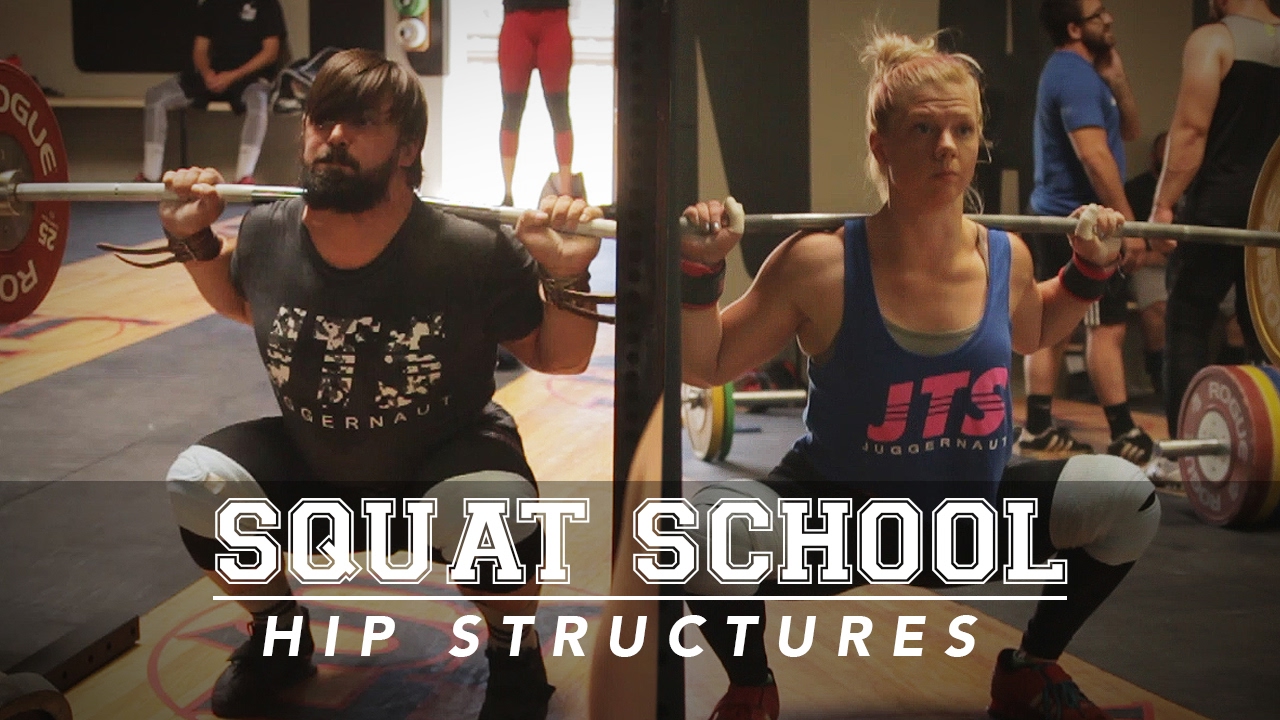
Squat School | Hip Structure and Squat Technique | JTSstrength.com
A video on YouTube. In Fitness, a Krater category.
Watch on YouTubeSummary by Krater
Dr. Quinn Henock explains how hip anatomy and structure affect squat mechanics, demonstrating that there is no single optimal squat position for everyone. He uses two elite powerlifters, Courtney Batchelor and Colin Burns, to illustrate how differences in hip mobility and structure dictate individual squat stances.
From the video
Answers: How does hip structure affect squat form and stance?
- hip structure and squat mechanics
- anatomical differences in squat stance
- hip internal and external rotation testing
- quadruped rocking drill for squat mobility
- counterbalance squat regression
Exercises
- air squat · bodyweight
- passive hip range of motion test · treatment table
- quadruped rocking drill · exercise mat
- counterbalanced squat · kettlebell
What it concludes
- Hip anatomy and structure dictate that individuals must squat differently rather than adhering to a single cookie-cutter stance.
- Courtney Batchelor prefers a wider, toes-out squat stance due to greater external hip rotation capacity.
- Colin Burns prefers a more narrow, straighter-toed squat stance because of greater internal hip rotation capacity.
- Quadruped rocking is an effective drill to help athletes find their most comfortable bottom squat position from a stable base.
Rate it, review it and add it to your lists in Krater.
Titles and thumbnails from YouTube. Krater isn't affiliated with, endorsed by or sponsored by YouTube or Google.