 Krater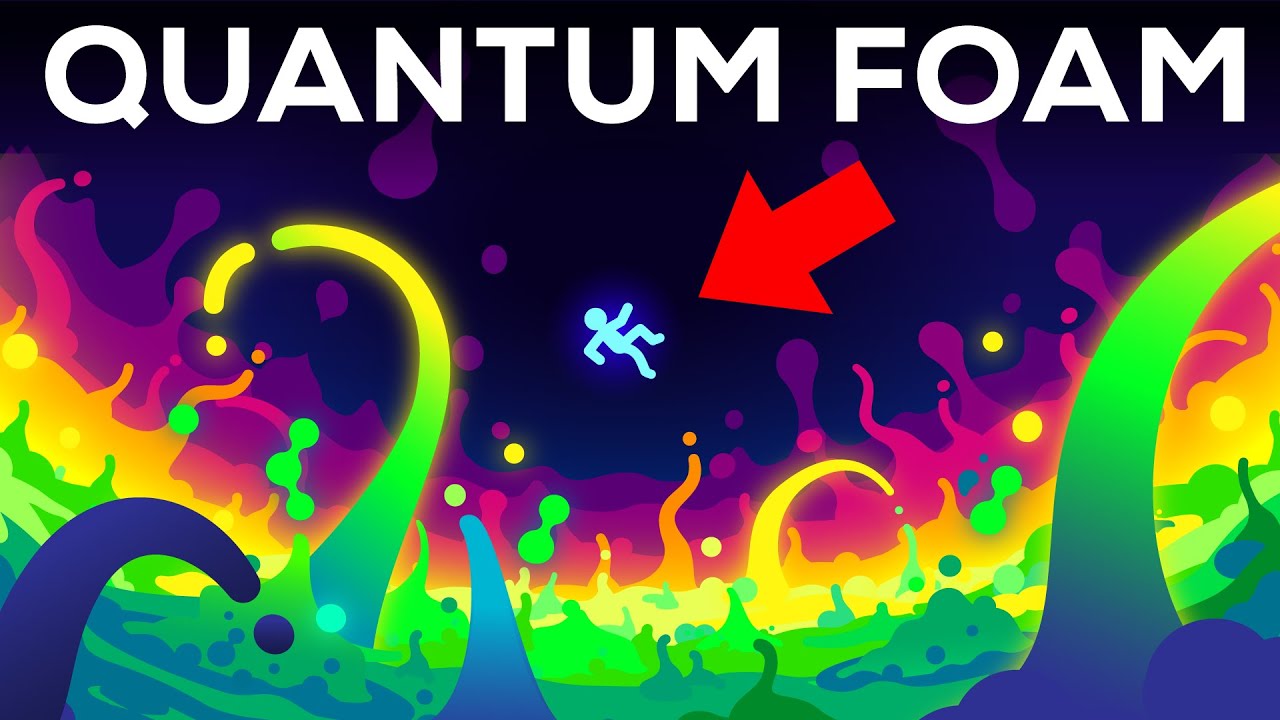
Let’s Travel to The Most Extreme Place in The Universe
A video on YouTube. In Explainers, a Krater category.
Watch on YouTubeSummary by Krater
This video explores scale in the universe by shrinking down to the size of a grain of sand, bacteria, molecules, and subatomic particles on a blade of grass.
From the video
Answers: What does the universe look like when you scale down to the microscopic and subatomic levels?
- Scale of the universe
- Miniature realm on a blade of grass
- Microscopic organisms and bacteria
- Molecular motion and heat
- Subatomic particles and atomic nuclei
What it concludes
- A blade of grass at a microscopic scale contains rows of individual cell houses with hard glass-like exteriors and stomata acting as mouths.
- Water molecules act like social creatures that group together, creating a strong cohesive force that traps you in miniature liquid environments.
- Bacteria move hundreds of body lengths per second in viscous water, experiencing almost no inertia and a weird jerky motion.
- At the molecular level, heat is the motion of molecules vibrating, twisting, and colliding in a furious pool.
- 99.9% of the space around you is a vacuum, meaning every time you take a breath you breathe in mostly nothing.
- Atomic nuclei are chaotic blurs that hold the same energy that powers nuclear bombs, twisting and vibrating 6 trillion times a second.
Rate it, review it and add it to your lists in Krater.
Titles and thumbnails from YouTube. Krater isn't affiliated with, endorsed by or sponsored by YouTube or Google.