 Krater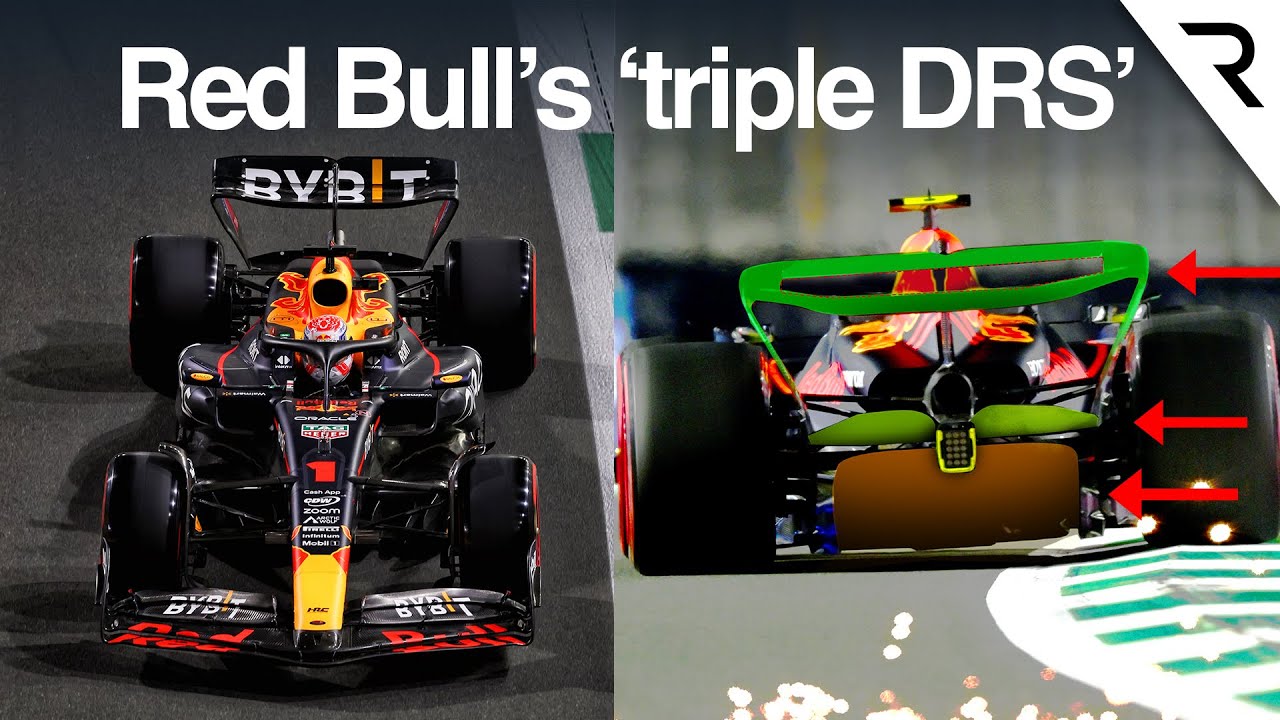
Red Bull's genius 'triple DRS' F1 trick explained
A video on YouTube. In Sports, a Krater category.
Watch on YouTubeSummary by Krater
This video examines Red Bull's DRS advantage in Formula 1, explaining through aerodynamics and design analysis why its rear wing and car integration make it exceptionally fast in a straight line.
From the video
Answers: Why is Red Bull's DRS so fast in Formula 1?
- F1 DRS mechanism and design
- Red Bull RB19 aerodynamic advantage
- Rear wing downforce and drag reduction
- Beam wing and underfloor airflow interaction
What it concludes
- Red Bull's DRS advantage is a result of a deeply integrated aerodynamic design spanning from the underfloor to the beam wing and rear wing, rather than a single trick.
- The beam wing and diffuser airflow stall when the DRS opens, reducing downforce and drag to yield significant extra top-line speed.
- Red Bull's floor-edge ceiling system allows increased overall downforce while permitting a softer suspension setup to prevent porpoising.
Rate it, review it and add it to your lists in Krater.
Titles and thumbnails from YouTube. Krater isn't affiliated with, endorsed by or sponsored by YouTube or Google.