 Krater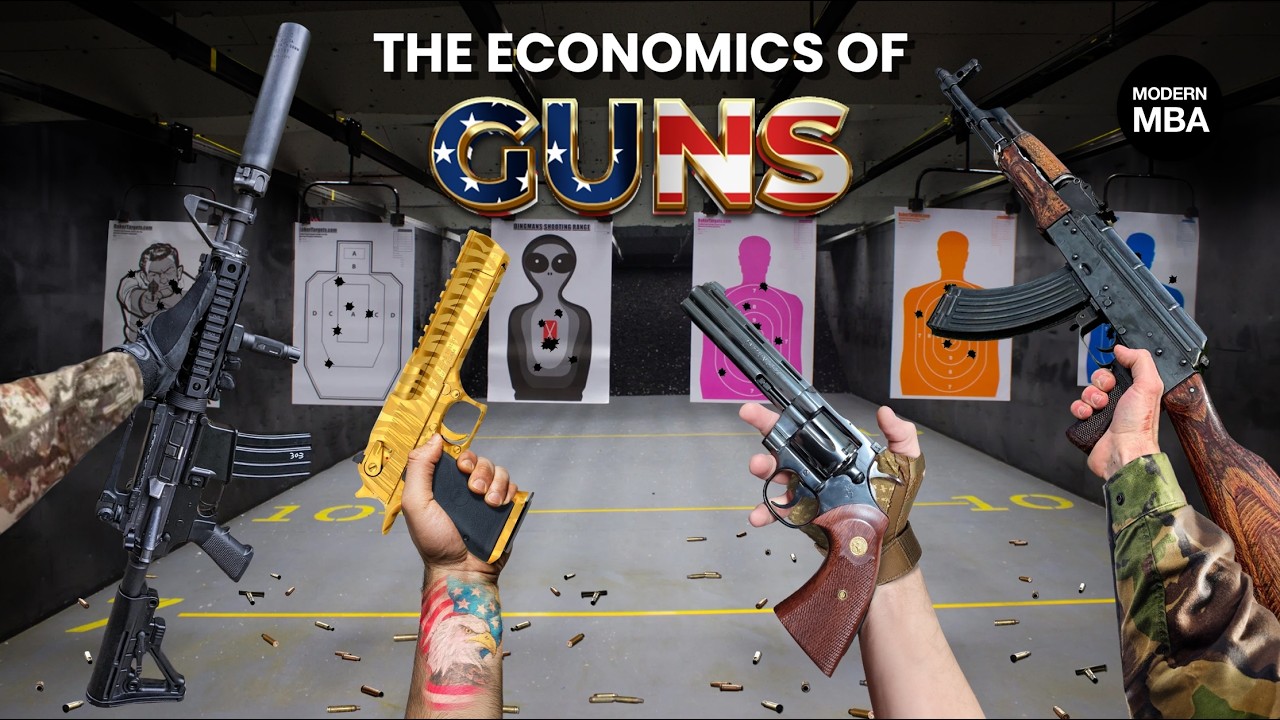
The Hidden Economics of American Gun Stores
A video on YouTube. In Business & Money, a Krater category.
Watch on YouTubeSummary by Krater
An economic and cultural analysis of the American civilian gun market, exploring how relationships, historical regulations, pop culture, and geopolitical events shape gun manufacturer revenues and retail store economics.
From the video
Answers: How does the American civilian gun market work and what drives gun prices and manufacturer success?
- American civilian gun market economics
- Firearm manufacturing and retail margins
- Impact of legislation on gun scarcity and prices
- Role of pop culture and media in gun demand
- Gun store inventory management and business models
What it concludes
- The American civilian gun market is the most lucrative and coveted prize for gun manufacturers worldwide, surpassing U.S. military spending on small arms.
- Politics, government regulation, and international relations dictate which foreign manufacturers get to sell firearms to American civilians.
- Top firearm manufacturers like Beretta, Glock, and HK reap 30 to 90 percent of their sales every year from American civilians rather than government contracts.
- Four historical paradigm shifts—the 1986 FOPA, the 1989 import ban, the 1994 assault weapons ban, and the 2012 Sandy Hook shooting—permanently altered gun supply, demand, and prices in the U.S.
- Brand prestige, pop culture appearances in movies and video games, and perceived scarcity heavily drive consumer demand and aftermarket prices for specific firearm models.
- Gun store profitability relies heavily on efficiency, volume, and strong local community relationships due to tight operating margins and heavy reliance on used inventory.
Rate it, review it and add it to your lists in Krater.
Titles and thumbnails from YouTube. Krater isn't affiliated with, endorsed by or sponsored by YouTube or Google.