 Krater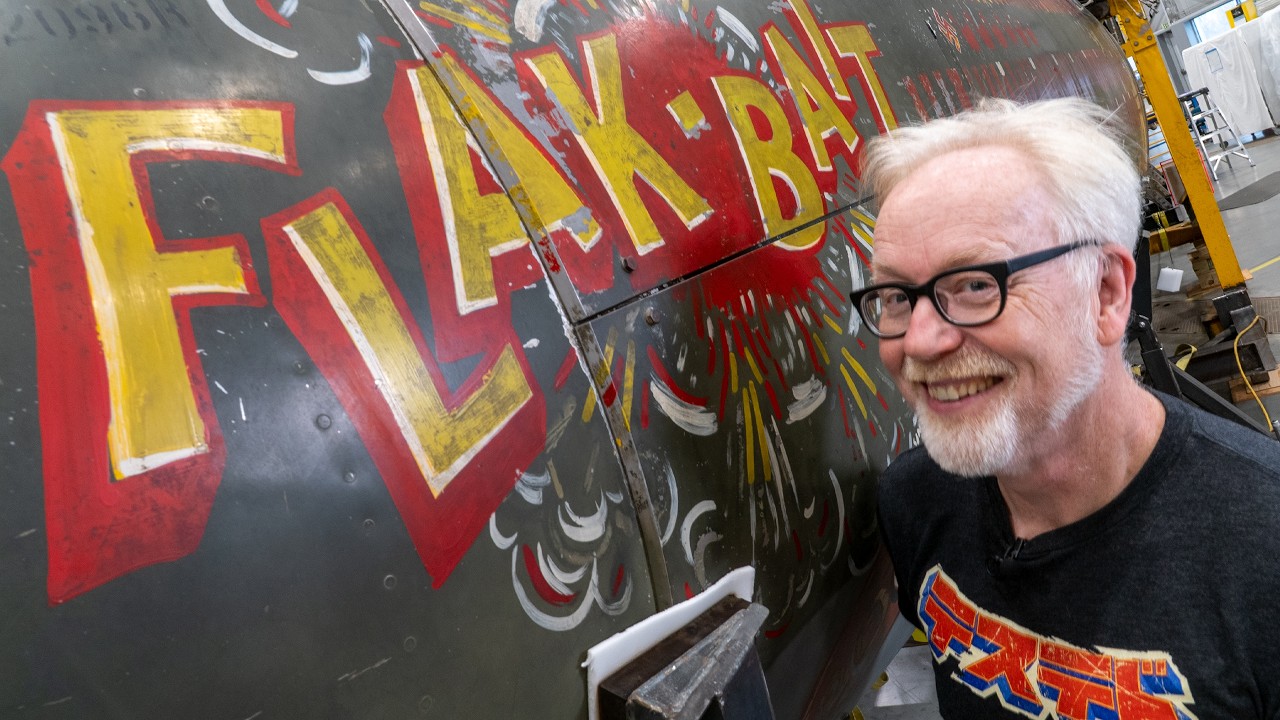
Preserving WWII’s Most Battle-Damaged Bomber
A video on YouTube. In Maker & Builds, a Krater category.
Watch on YouTubeSummary by Krater
Adam Savage visits the National Air and Space Museum's Mary Baker Engen Restoration Hangar to examine the restoration of Flak Bait, a B-26 Marauder bomber that survived over 200 combat missions in World War II. He talks with conservators about preserving the aircraft's original material, history, and markings while addressing post-historic damage.
From the video
Answers: How is the World War II bomber Flak Bait being restored and preserved at the Smithsonian?
- Aircraft restoration
- World War II bomber Flak Bait
- B-26 Marauder preservation
- Museum conservation techniques
- Art conservation methods
What it concludes
- Flak Bait is the American aircraft that survived the most combat missions in World War II, flying over 200 missions against Nazi Germany.
- Since 1961 when the aircraft was accepted by the Smithsonian, the nose section of Flak Bait was on display at the National Mall building, but the aircraft has never been fully assembled or on display at the Smithsonian.
- The aircraft was deemed too dangerous to fly back to the United States after the war, so it was disassembled and brought back by ship.
- The conservation team applies an in-painting technique using a 10-foot rule where paint chips from 1943 are matched while post-1976 paint chips are covered.
- Conservators use a reversible paper conservation product called Evelon with water to carefully treat and clean overpainted surfaces without harming original paint.
Rate it, review it and add it to your lists in Krater.
Titles and thumbnails from YouTube. Krater isn't affiliated with, endorsed by or sponsored by YouTube or Google.