 Krater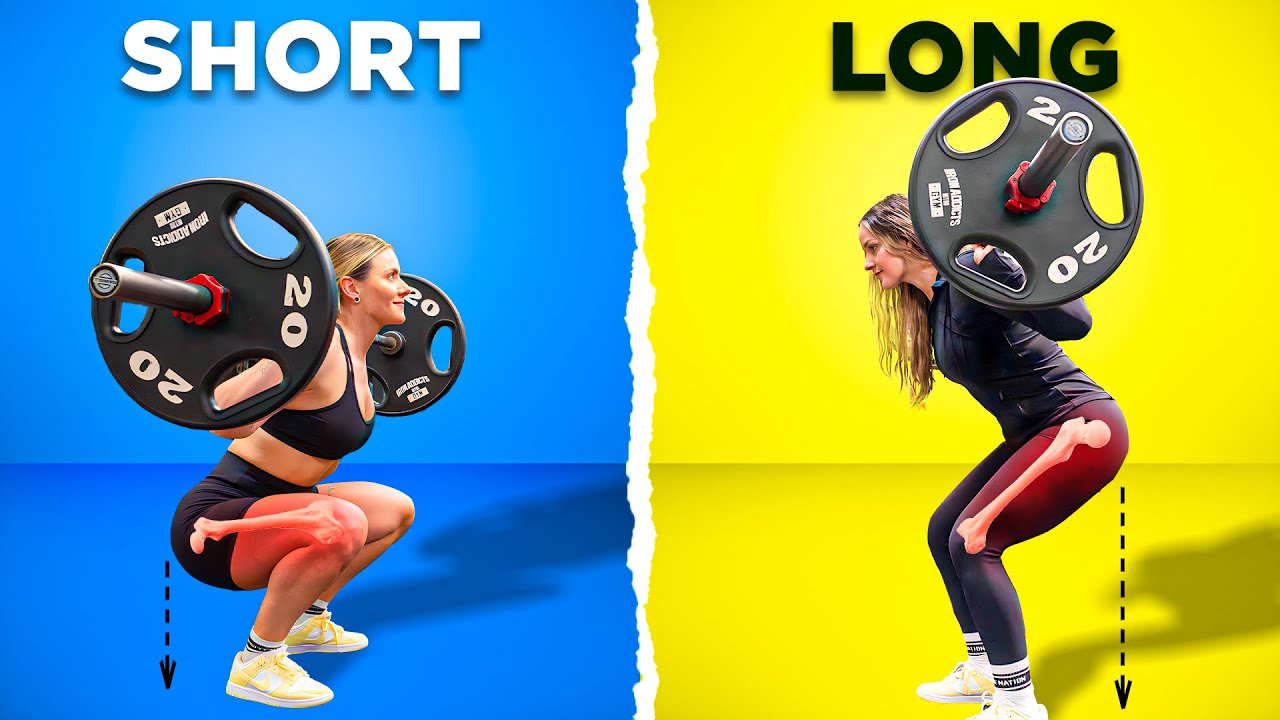
How To Perform The Perfect Squat (FOR ANY BODY TYPE)
A video on YouTube. In Fitness, a Krater category.
Watch on YouTubeSummary by Krater
This video explains how to adjust your squat technique based on your femur length, hip anatomy, ankle mobility, and foot positioning. It concludes that everyone's squat looks different due to their anatomy, and provides a five-step checklist to find the best squat form for your body type.
From the video
Answers: How do I squat for my body type and anatomy?
- Squat anatomy and femur length
- Foot positioning for squats
- Hip internal and external rotation
- Ankle mobility testing
- Heel elevation in squats
- Load positioning in squats
Exercises
- barbell squat · barbell
- front squat · barbell
- goblet squat · dumbbell
- calf stretch · bench · 5 reps for a 5 second hold
- ankle joint mobilization · resistance band · 10 reps back and forth
- hip external rotation mobilization · resistance band · 10 reps for a 5 second hold
What it concludes
- Average femur length is roughly 25% of one's total height.
- People with longer femurs need a wider stance and more hip opening during descent.
- A toe-out angle between 10 and 20 degrees is most optimal for most people when squatting.
- A heel lift or weightlifting shoe can help lifters with long femurs squat deeper with a more upright chest.
- The TYR L-1 Lifter is the only lifting shoe on the market with a wide toe box.
Rate it, review it and add it to your lists in Krater.
Titles and thumbnails from YouTube. Krater isn't affiliated with, endorsed by or sponsored by YouTube or Google.