 Krater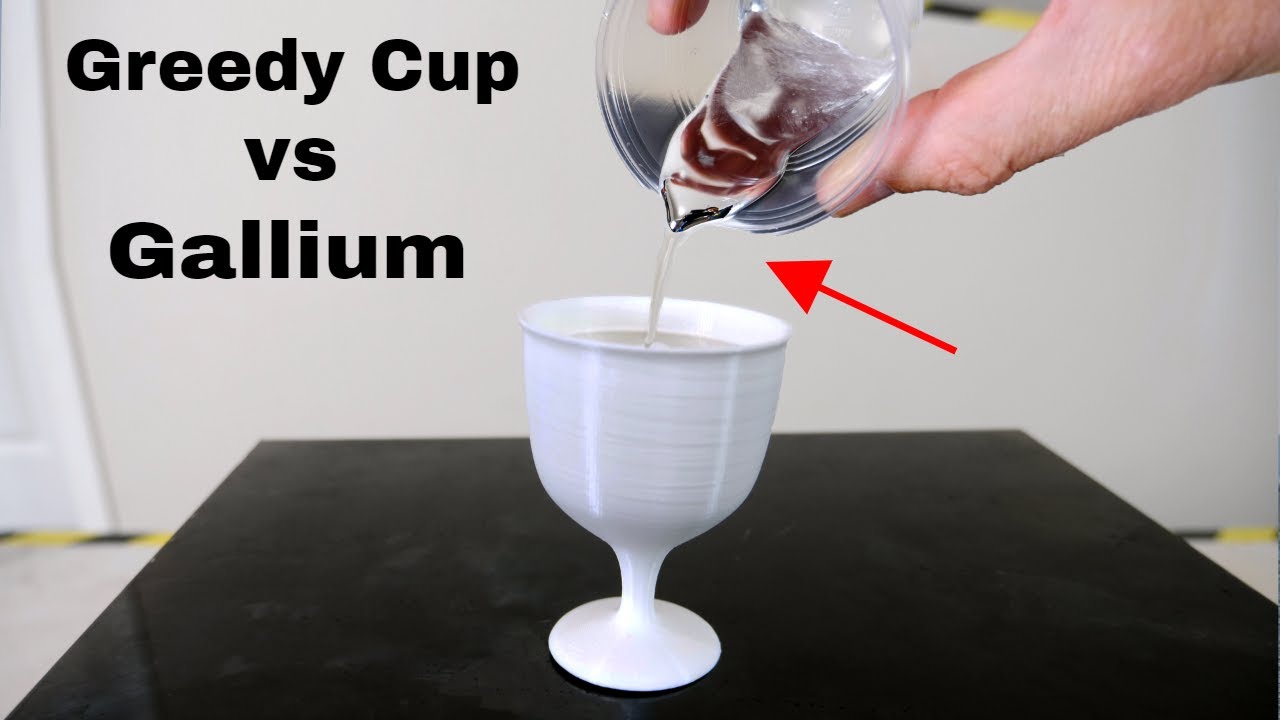
How To Stop The Greedy Cup
A video on YouTube. In Science & Engineering, a Krater category.
Watch on YouTubeSummary by Krater
The creator demonstrates how the greedy cup (or Pythagorean cup) works and tests two methods for defeating its siphon effect — using a dense liquid like gallium at the bottom and testing it in a vacuum chamber — concluding that gallium stops the siphoning because it is dense enough to balance the water column.
From the video
Answers: How does a greedy cup work and how can you stop it from leaking?
- Pythagorean cup mechanics
- siphon effect
- Law of Communicating Vessels
- Pascal's law of communicating vessels
- liquid gallium density
- vacuum chamber physics
What it concludes
- The greedy cup's siphon effect relies on the Law of Communicating Vessels, where the water level inside the U-shaped tube matches the level outside until it exceeds the fill line.
- Pouring a very dense liquid like gallium at the bottom of the greedy cup defeats the siphon effect because the weight of the water on top is not heavy enough to push the dense liquid up the tube.
- The greedy cup siphon effect still functions inside a vacuum chamber because the U-shaped tube is narrow enough for capillary action and existing liquid flow to push cavitated bubbles without needing atmospheric pressure.
Rate it, review it and add it to your lists in Krater.
Titles and thumbnails from YouTube. Krater isn't affiliated with, endorsed by or sponsored by YouTube or Google.