 Krater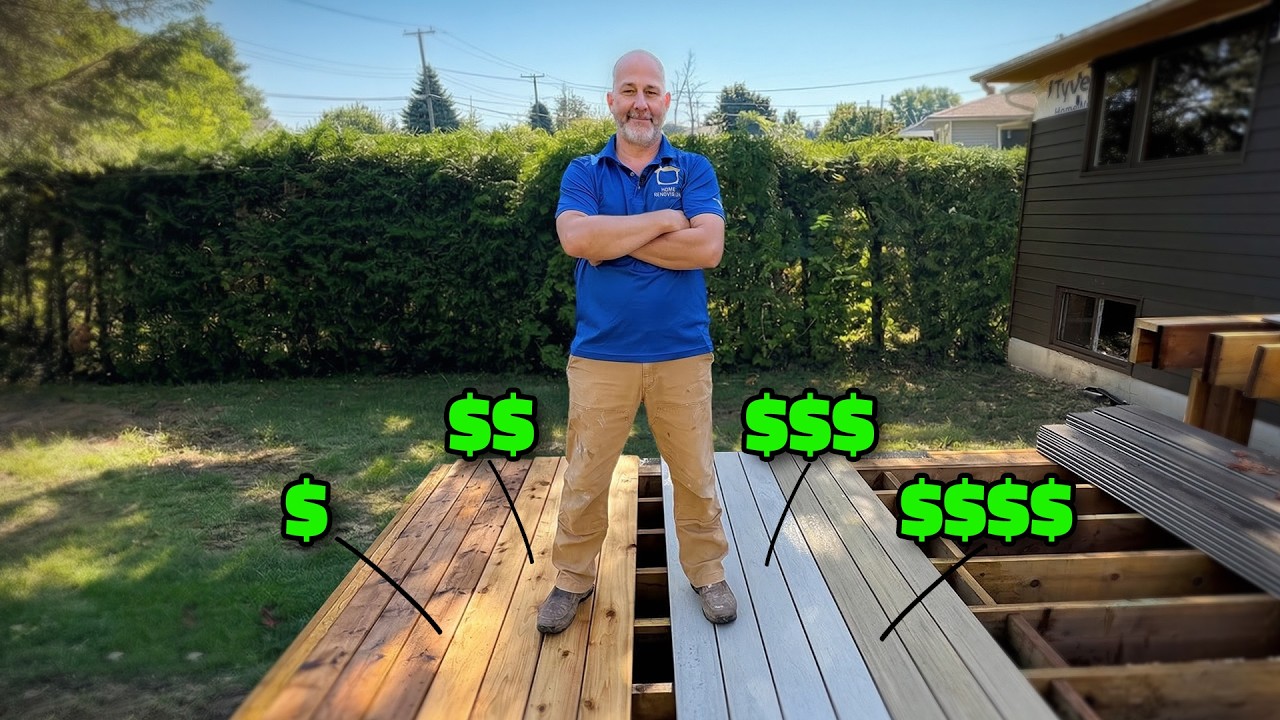
Don’t Waste Your Money on Decking (Composite vs Wood)
A video on YouTube. In DIY & Home Repair, a Krater category.
Watch on YouTubeSummary by Krater
A comparison and installation guide for four common deck materials: pressure treated wood, western red cedar, composite, and PVC. The video evaluates installation methods, cost over 50 years, and weather resistance.
From the video
Answers: Which deck material is best: pressure treated, cedar, composite, or PVC?
- Pressure treated wood decking installation and costs
- Western red cedar decking installation and costs
- Composite decking installation and costs
- PVC decking installation and costs
- Deck screw selection and corrosion resistance
- Hidden fastener systems for decking
- Deck deflection under load testing
- Heat and fire resistance testing of decking materials
What it concludes
- Pressure treated wood is the lowest cost option and is naturally prone to rot and bugs if untreated.
- Western red cedar is naturally resistant to rot and bugs, smells great, and has a 15 to 20 year lifespan.
- Composite decking is 100 percent recycled plastic and wood, highly resistant to moisture, and comes with a 50-year warranty.
- PVC is solid plastic with a high price tag and good fade resistance, but deflects more under weight than wood or composite.
- Composite decking has the lowest deflection under extreme heat and weight tests compared to pressure treated wood, cedar, and PVC.
- For a four-season climate with hot and cold extremes, a no-maintenance luxury composite deck provides the best long-term value despite a higher upfront cost.
Rate it, review it and add it to your lists in Krater.
Titles and thumbnails from YouTube. Krater isn't affiliated with, endorsed by or sponsored by YouTube or Google.